
Botswana
Qorokwe: Sharing stories, exceeding expectations
Your Guide to Africa
Melissa Siebert
10/28/2026
Where every encounter tells a story

After I gape at the lagoon on the camp’s doorstep – where hippos bob and an elephant herd meanders through the lala palms on the far side – GM Kessa Saokonga leads me to my suite. It’s a five-minute walk through a feverberry forest on an elevated wooden walkway, dipping down to ground level intermittently to let the larger creatures cross. Because, I soon learn, creatures are here, there, and everywhere.
Kessa leaves and I feel like I’ve moved deep into the bush. The contemporary suite’s steel, canvas, wood, and glass almost vanish amid the trees; its front ‘wall,’ mostly screen, is a window onto the lagoon and woodlands beyond. The colours are earthy, African. The only sounds are the overhead fans whirling and the thumps of baboons and vervet monkeys leaping onto the roof and dashing off again.
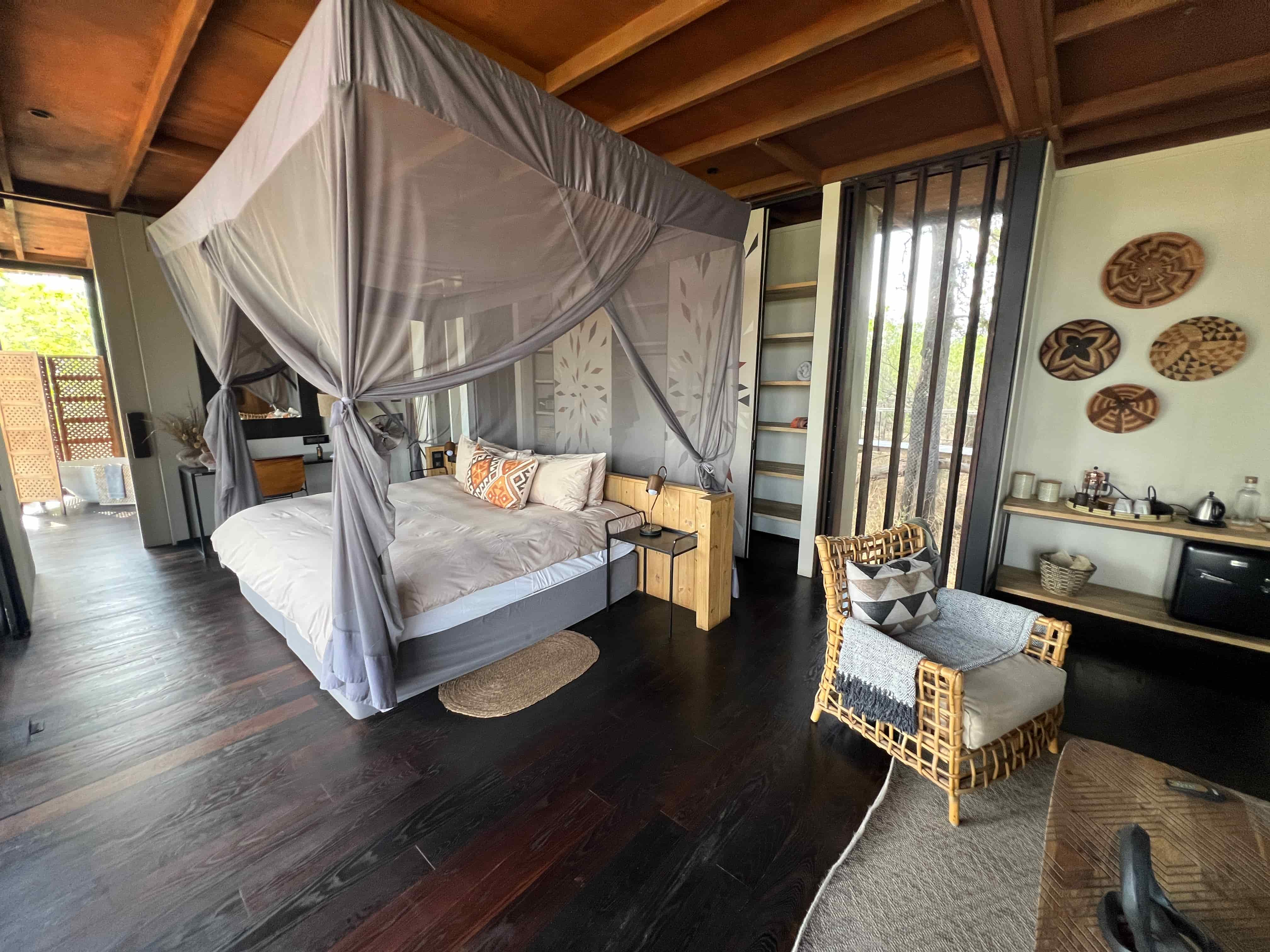
In the following days, from my hideaway near the end of the lagoon, I will be graced by the company of peaceful impala, trotting warthogs, elephants grazing and drinking, chattering ground squirrels, flashy lilac-breasted rollers, a majestic fish eagle or two, a mud-rolling wildebeest, and the almost ever-present monkeys and baboons. Plus, the sounds of lion and hyena at night.
Qorokwe staff – mostly from six villages belonging to a trust managing NG 32, the private concession where the camp is located – hold many stories, as their families and communities do. It’s not unusual to hear: ‘My grandmother taught me’ or ‘My grandfather told me’.
Many stories emerge with the guides, of course – some of the best I’ve ever met. My first Qorokwe drive is with Mike Tebogo; we set out on a surprisingly temperate afternoon to explore some of Qorokwe’s 27,300 hectares, a biodiverse paradise of floodplains, wetlands, palm-studded islands, woodlands, and savannah.
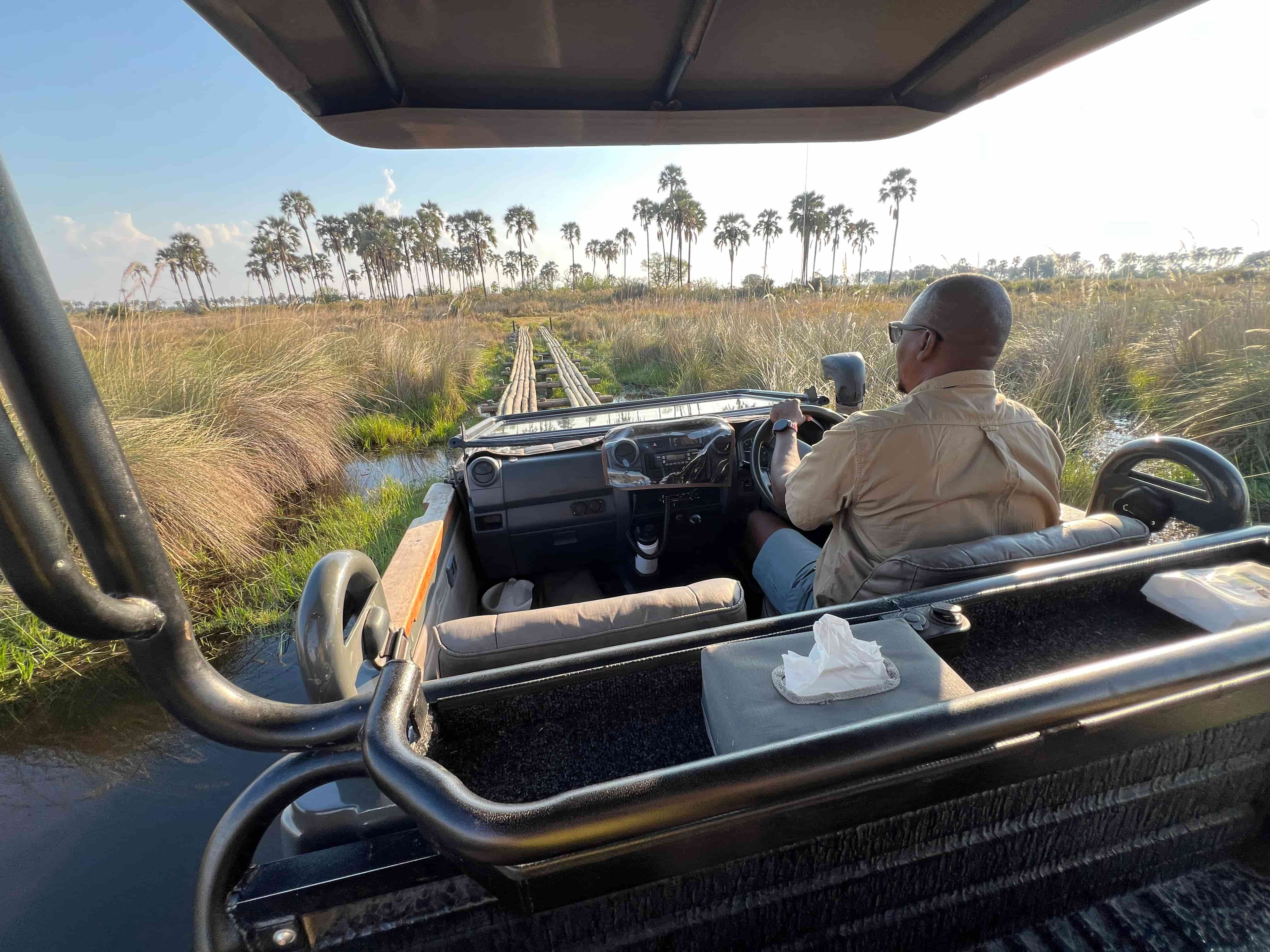
The views are panoramic; almost every scene feels like a painting, with zebra, buffalo, wildebeest, impala or elephant herds stretching across the horizon. I’m lulled by the wonder of it all, and the strong scent of wild sage. But then Mike stops about 10 metres from a tall camelthorn tree.
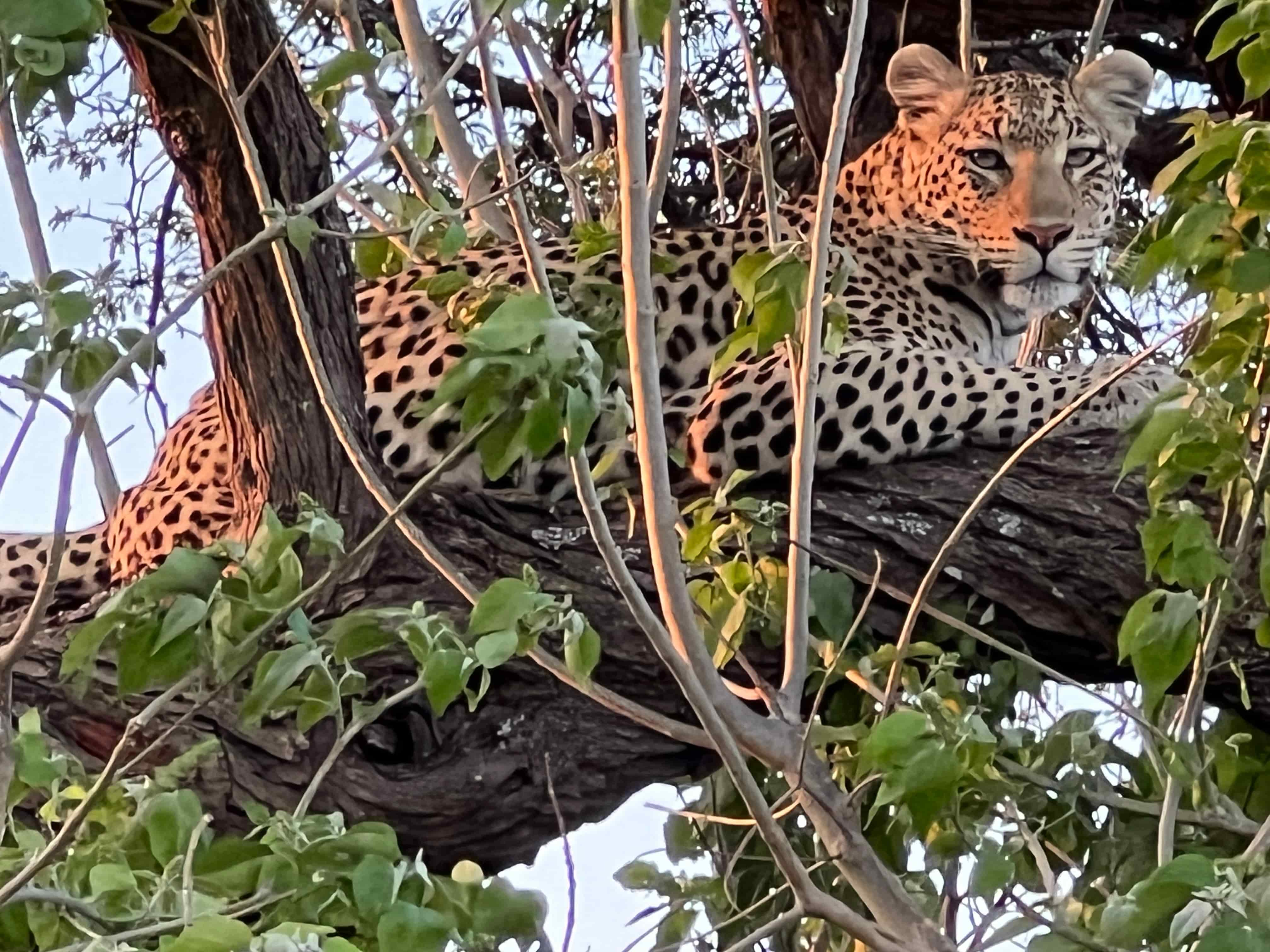
‘Leopard,’ Mike says, but I can’t see it. He drives closer. There, lounging on a high branch, is the most gorgeous cat, a young female, Mike says. Scouting for her next meal. We watch her; she gives us a few glances. I’m spellbound and happy to stay in her presence for fifteen, maybe twenty, minutes or more. The beauty of game viewing at Qorokwe. No one rushes you.
On the way back to camp, Mike shares information about the traditional use of plants. Wild basil and wild sage, for instance, everywhere in the area.
‘Wild basil was used as perfume in the old days,’ he says. ‘Wild sage was used to disguise people’s scent while hunting and to keep away mosquitos, and silky sage for toilet paper.’
Like many at Qorokwe and vicinity, Mike hails from the Bayei people, part of the Lozi tribe that migrated from Zambia to the Delta in the eighteenth century. ‘Cousins’ of the San Bushmen, he says. Hunting, fishing, navigating the waters on the now iconic mekoro, then wooden canoes, now fibreglass.
‘It was the easy life,’ Mike says, with a hint of nostalgia.
His real name – Balogi – harks back to tradition. ‘It means basket weavers,’ he explains. ‘My mother named me this because she was a weaver. Though I’ve never ever woven a basket!’
Later as darkness falls we seven guests sit in camp chairs circling a flickering fire. With soft singing growing louder in the shadows, 20 or so Qorokwe staff emerge, welcoming us to Boma Night. The harmony, the warmth, inspire. More stories emerge through song and dance: a hilarious frog dance meant to summon rain, a super-energetic dance featuring different village characters celebrating a good harvest or hunt. I’m pulled into the last one, with no idea what I am doing except clapping and skirting around the fire’s flames. Hypnotised.
The typical October heat arrives the next afternoon, thankfully subsiding at night. Just after dawn guide John Nshimane, who towers above me like a giant jackalberry, takes me for a morning walk to a place often mentioned by the guides – Karai, a vast floodplain ringed with palms, feverberry trees, and the place’s namesake, camelthorns.
‘We often bring guests here when they first arrive,’ John says as we trek across the wide-open terrain, spotting old elephant tracks, some hyena dung (white from the bones these predators consume), and clusters of zebra and wildebeest. ‘The airstrip is about seven kilometres away. We bring them here for “the welcoming committee” – often huge herds to greet them.’
As a pair of black-backed jackals runs off and the zebra and wildebeest, immobile, watch us closely, absolute peace descends. Karai feels both wild and safe at the same time.
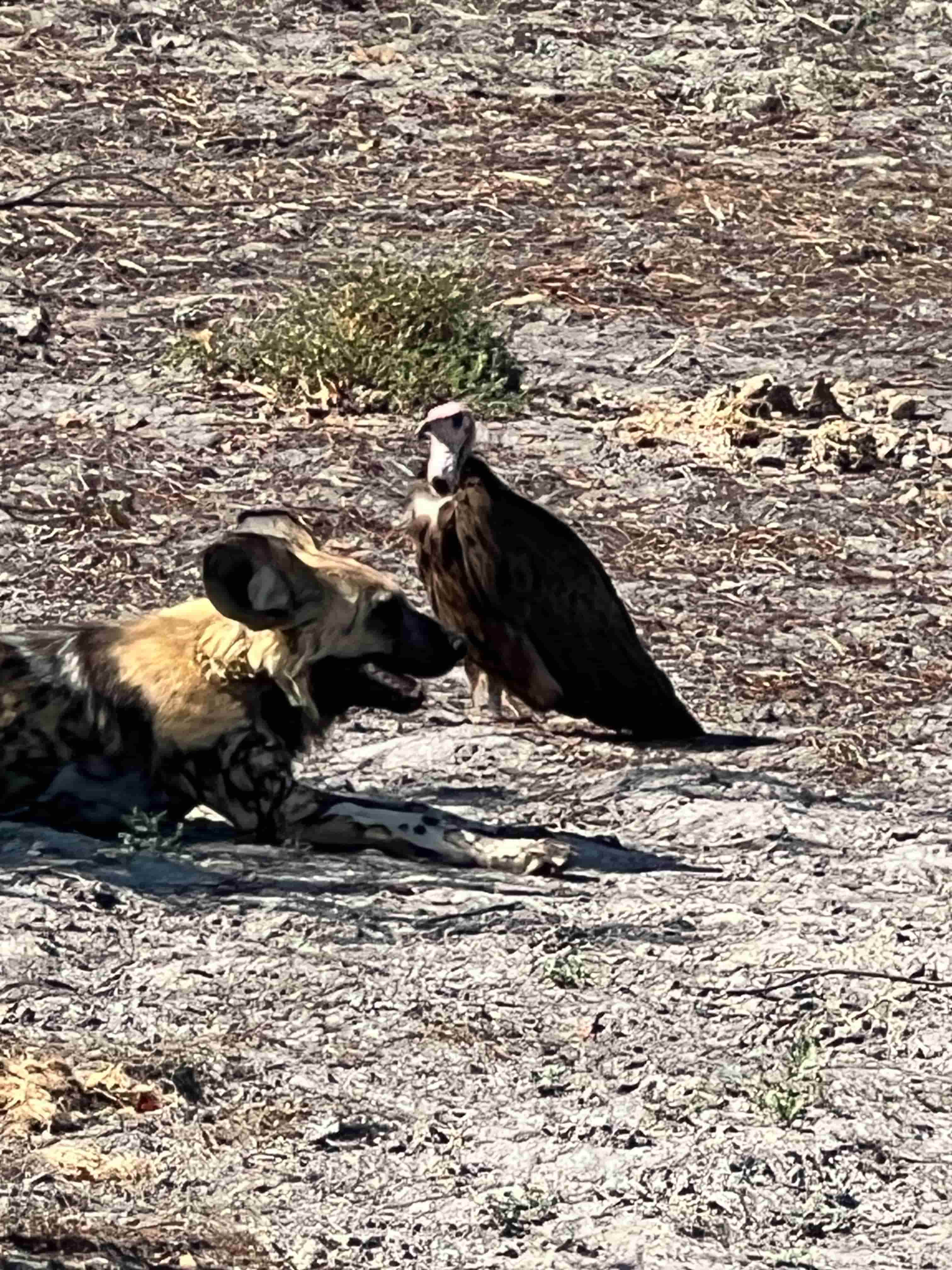
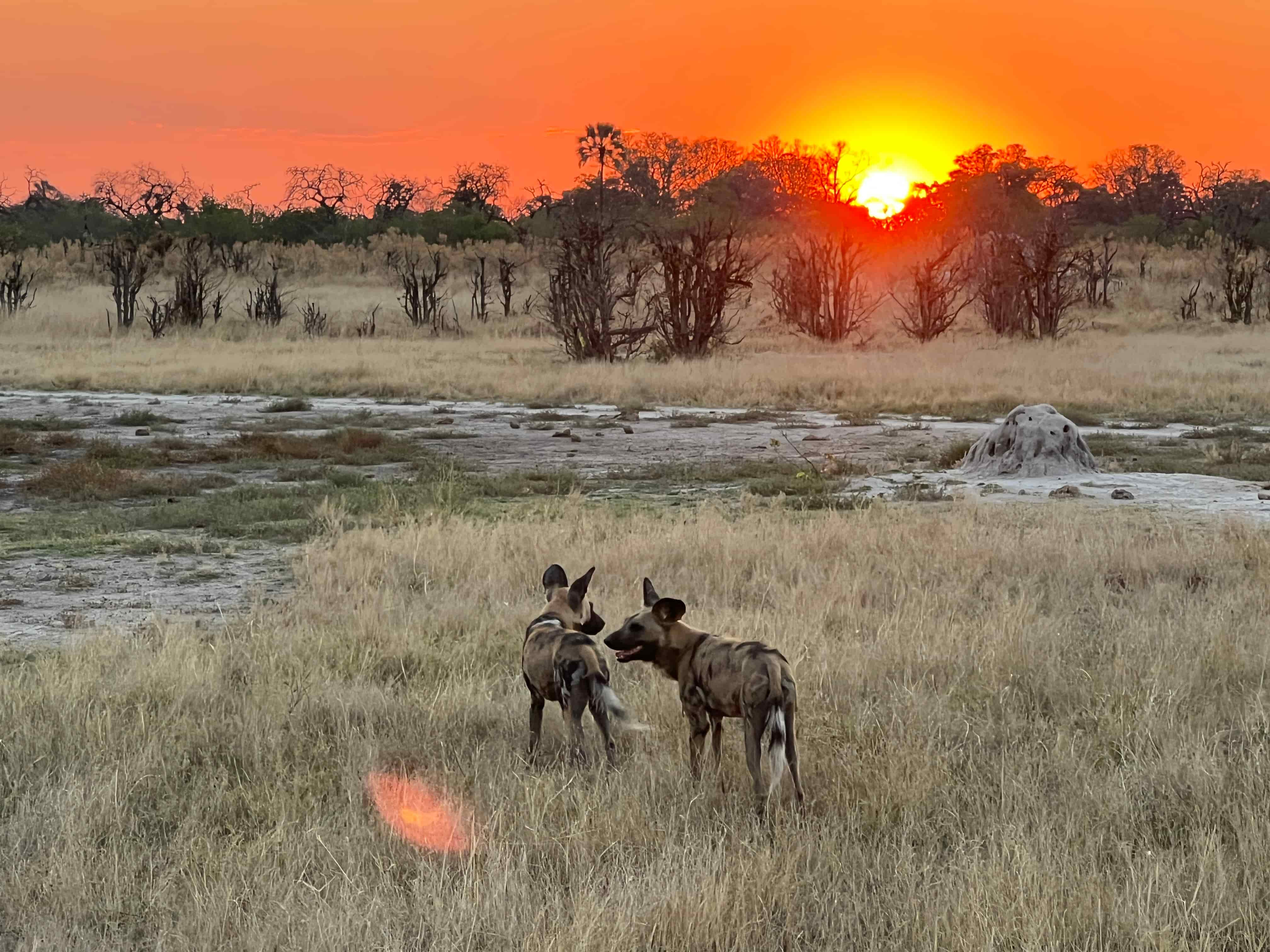
We return to the game vehicle and head back to camp – with major rewards along the way. First a pack of about 20 African wild dogs, mostly flopped down in the shade under scrawny mopane trees. A group of five pups, though, wrestle together and eventually start yelping at their elders to be fed. One adult lies next to a vulture, that just sits, waiting, waiting.
The heat starts getting to us as well. We drive on, and 10 minutes later come across others seeking shade: 17 lions of the Qorokwe Pride. Again we stop, and watch, and watch as the lions amusingly shift resting positions. Finally, the two alpha females rise and lead the pack slowly past us, roughly in single file, in search of better shade.
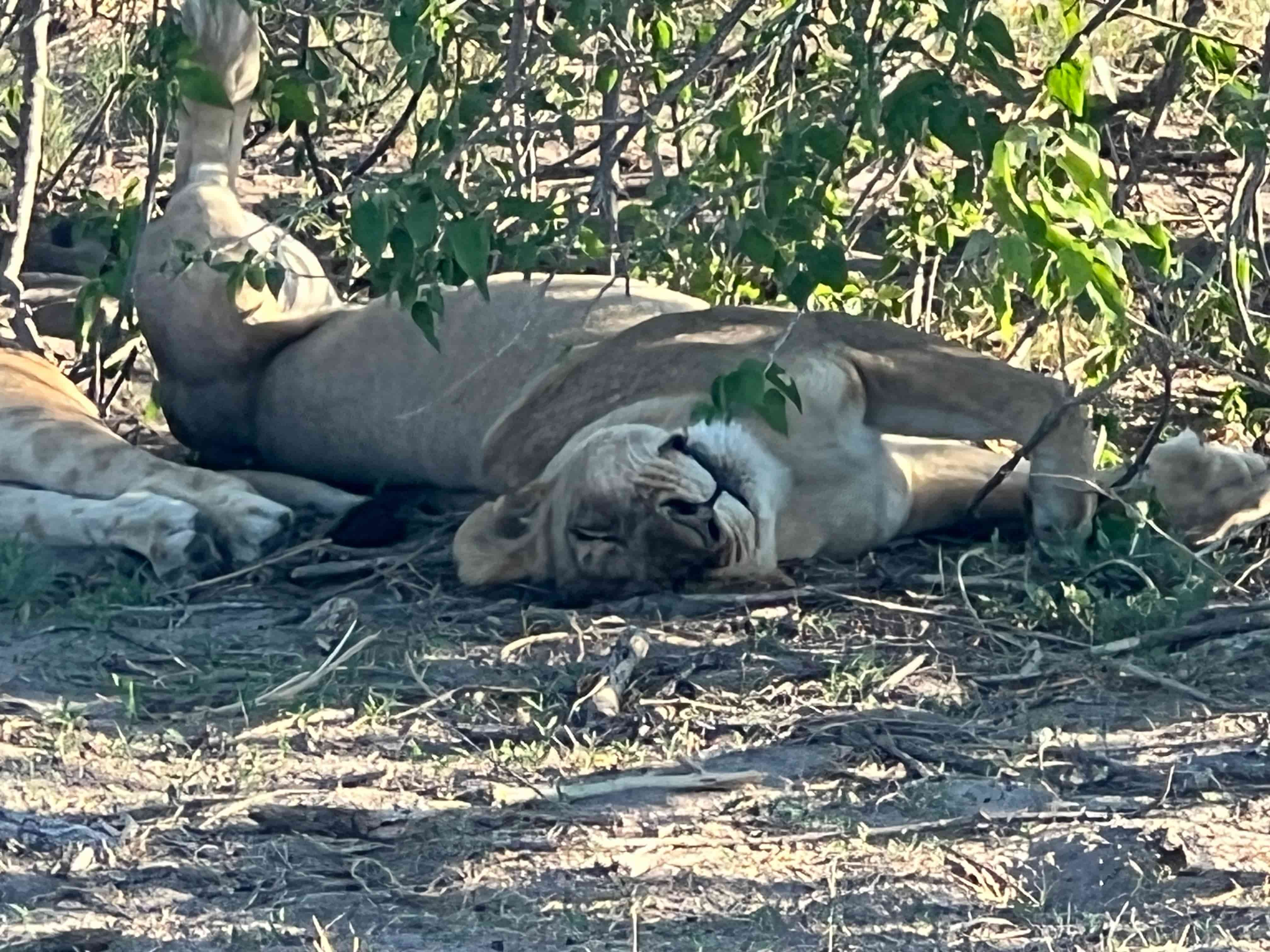
The same scenario repeats at dusk, with wild dogs and lions – and a honey badger couple running in the falling darkness, the male with a snake in his mouth.
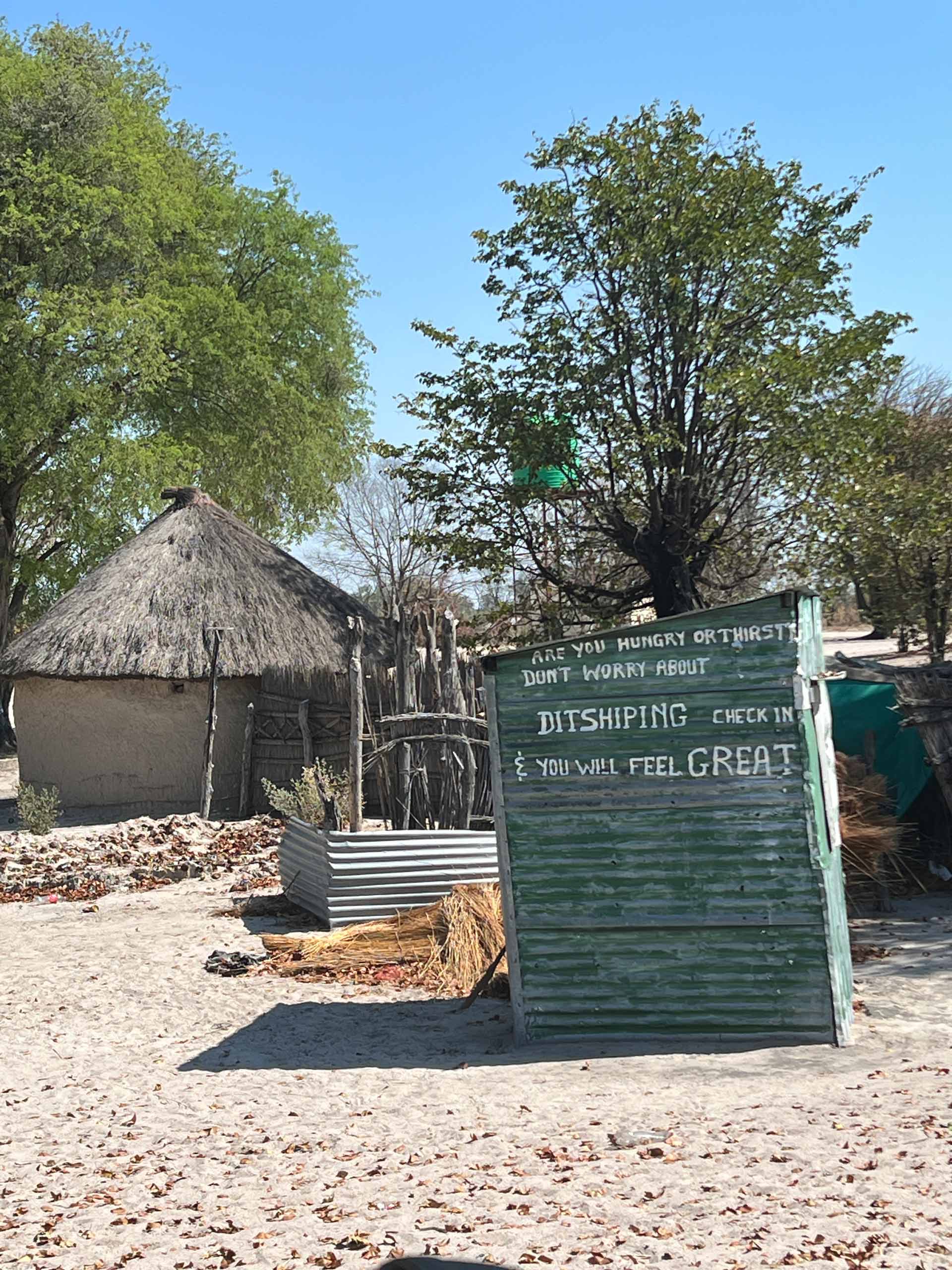
The following morning brings a visit to Ditshiping, one of the six villages where Qorokwe does impact work; they’ve recently built a kgotla – a community court/meeting place – there. Kessa, Joel Kefilwe, John, and I set off, arriving 45 or so minutes later at this largely traditional village of fewer than 400 people. Many of the homes are traditional mud and thatch rondavels, with reed bomas. Several sleepy dogs snooze in the dust. Villagers gather in the shade under giant trees.
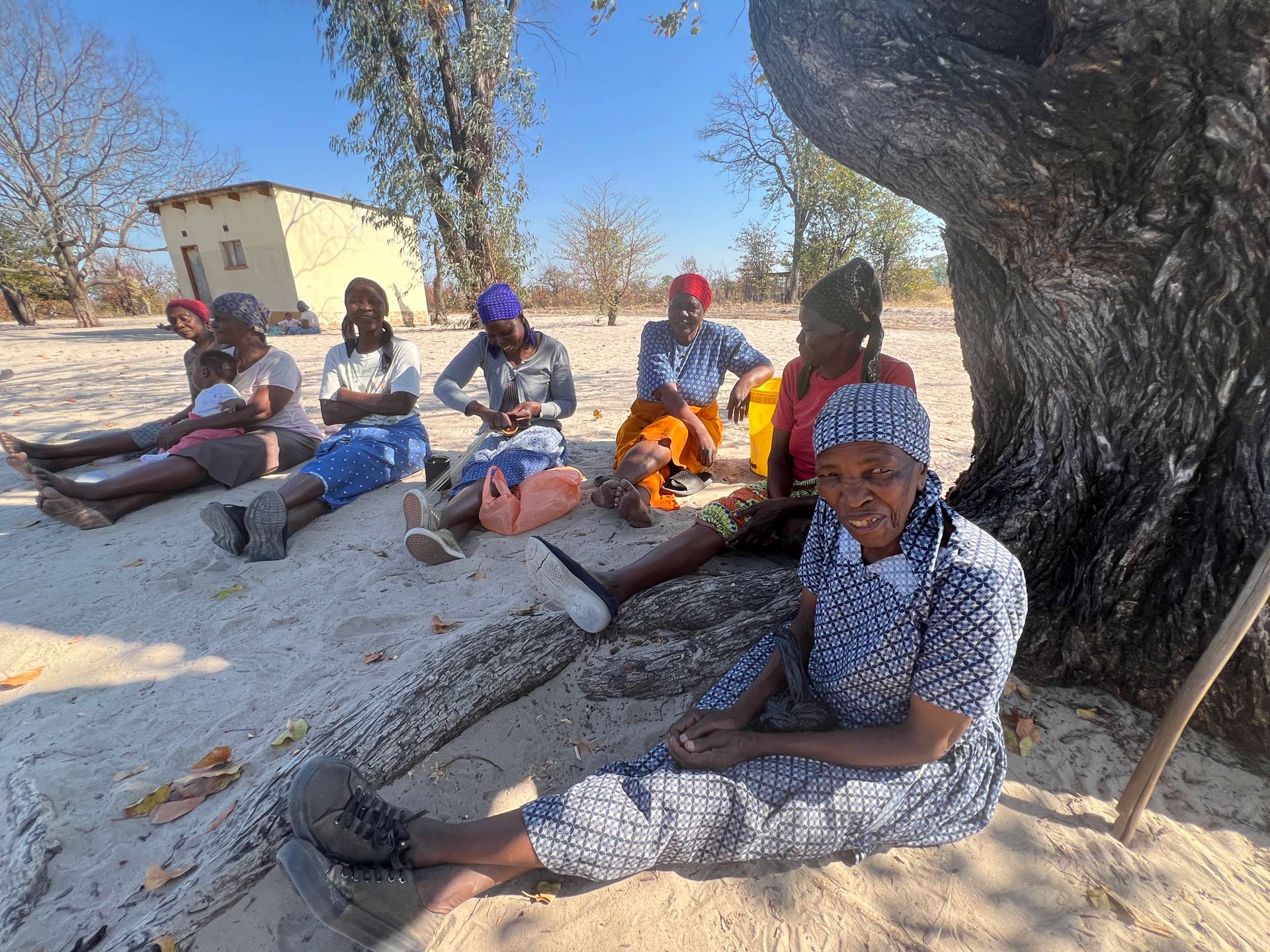
We meet a class of preschoolers learning English; Phil, a local poler who takes visitors on mokoro trips; elder Julius, who pleads with Qorokwe staff to bring more guests to visit; and a dozen or so women chatting in the shade, on the sand, one weaving a tiny taupe and turquoise basket. She gives me a try, which elicits gentle laughter.
Julius tells me that Ditshiping’s original name is San: Xam Tau, spoor of the lion. Driving back to Qorokwe, Kessa says she heard it was Joko Joko. Whatever that means. The name unravelling continues. John’s already tracked down the etymology of the two local rivers: Gomoti, which means 'I can hear' (the water, presumably), and Santantadibe, which refers to the sadness that they were driven from their hunting grounds near the river.
One more afternoon and evening at Qorokwe. A surprise invitation from two American guests, sisters Lynn and Cheryl, takes me out on their afternoon game drive and mokoro excursion. Jacob Saobe, repeat guest Lynn’s favourite, evidently, guides us. He’s a natural-born storyteller, and full of fun.
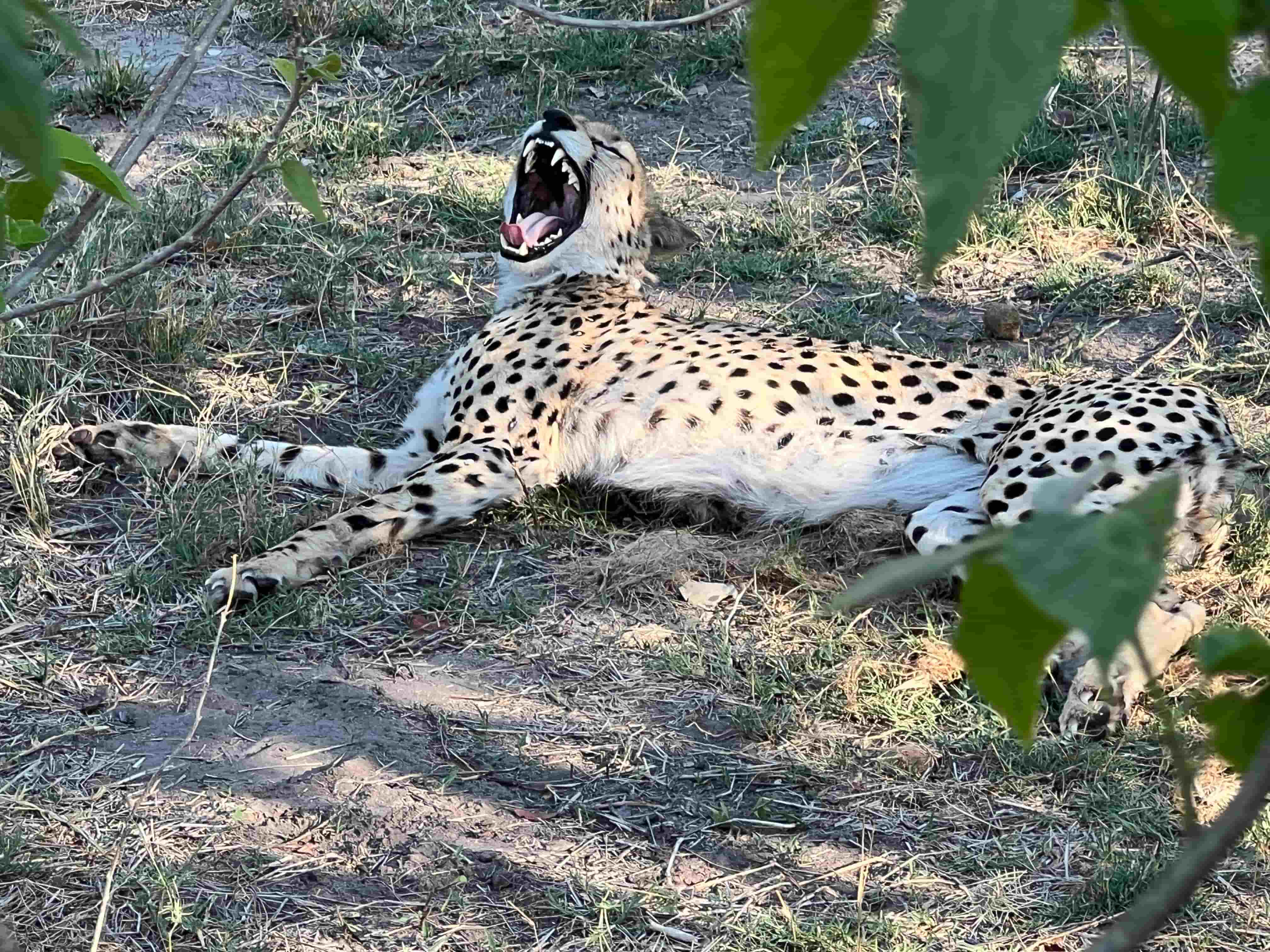
Jacob drives us to staff quarters where, he says, ‘a cheetah just came to say hi at my tent’. The cheetah, a young male, is still there, resting in the shade, flicking his long, black-tipped tail and ignoring us. As with the other sightings, we linger. We watch. We listen.
We drive away towards the mokoro launching place, crossing a narrow pole bridge over the Santantadibe River, as rows and rows of fan and lala palms stretch out to the horizon. Up ahead a breeding herd of elephant sees us; two females shake their heads and flap their ears, warning us. But then the herd lumbers peacefully off across the river.
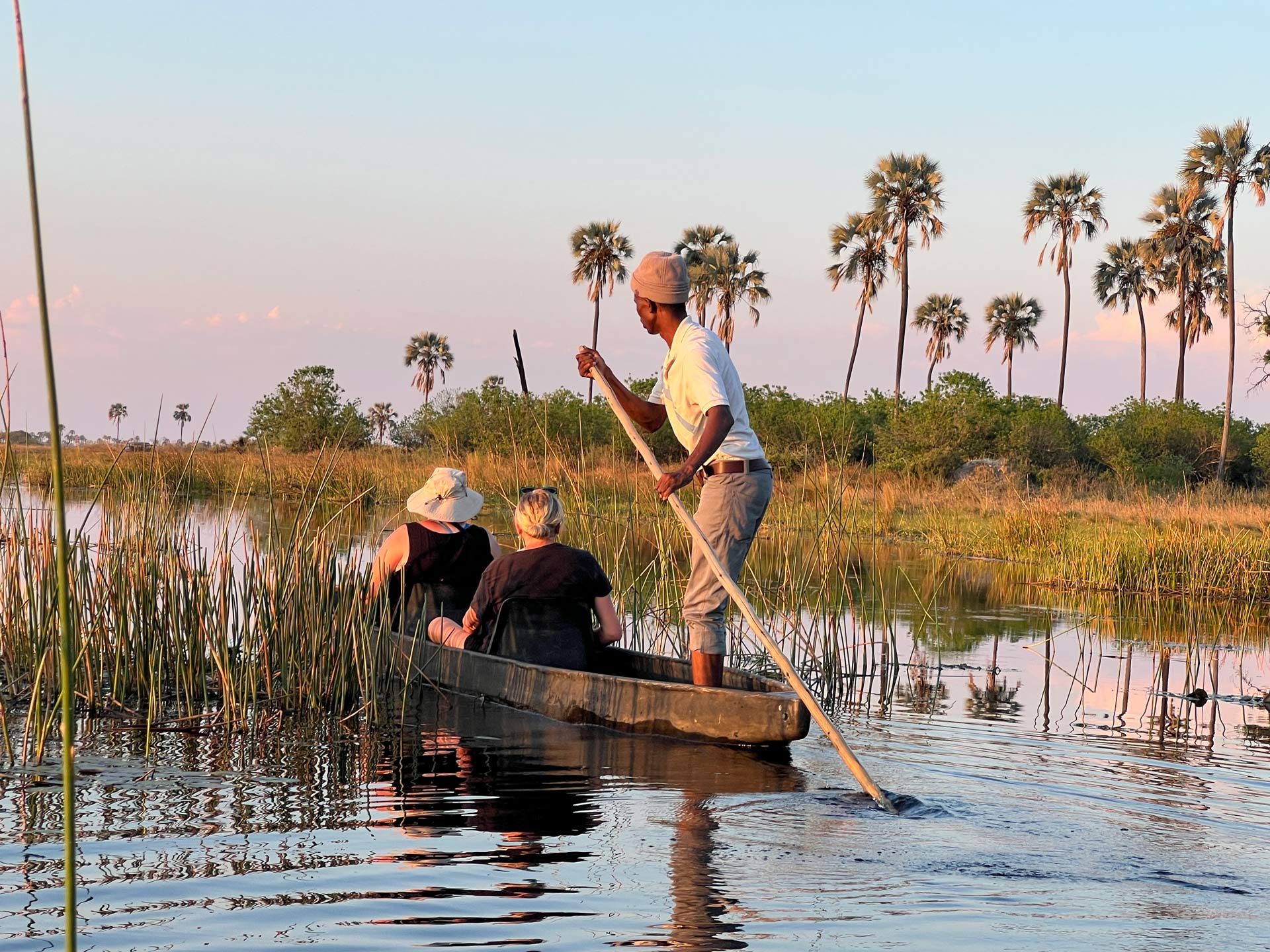
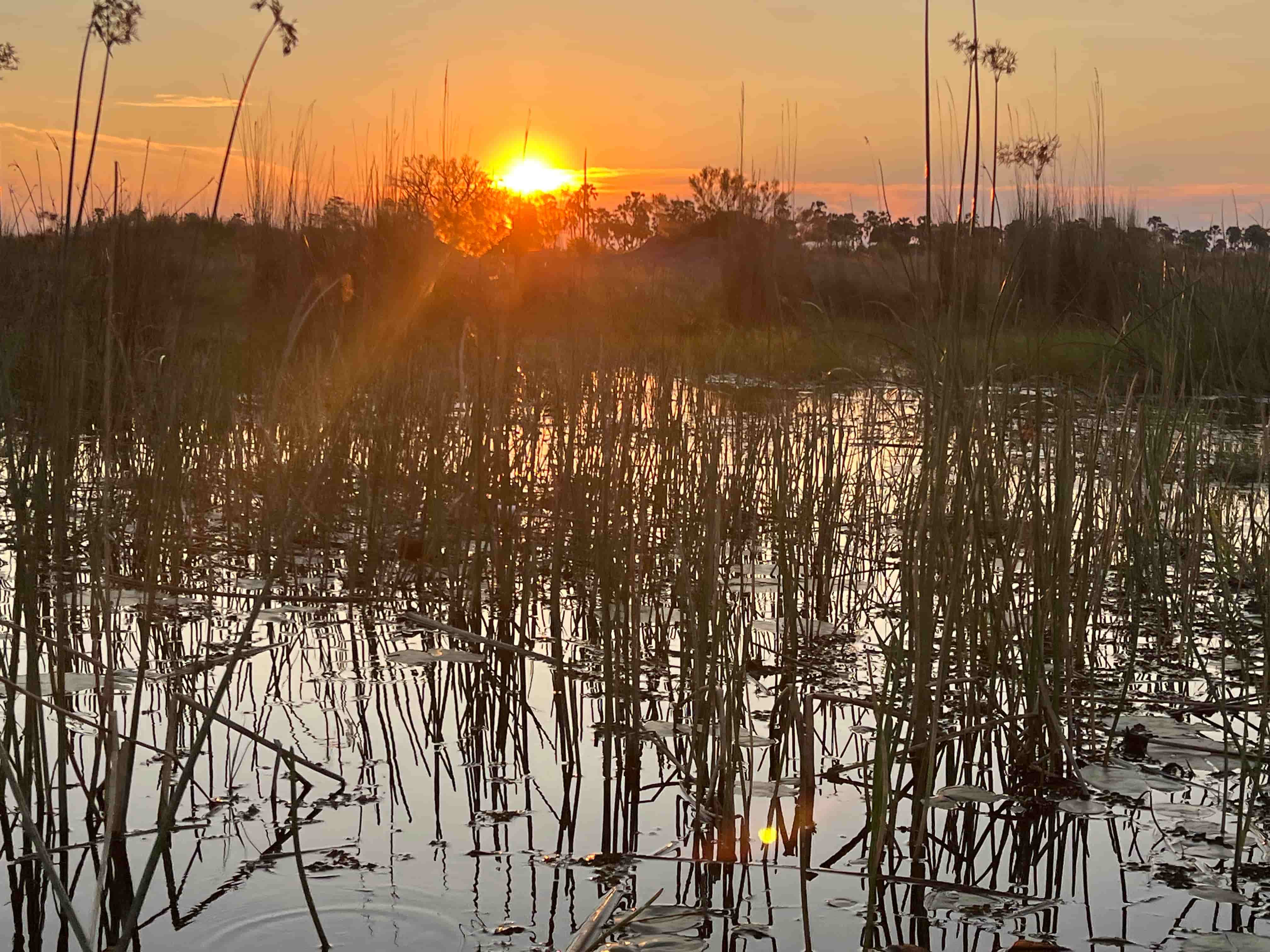
Once on the water in two separate mekoro, as MG and Moses’ poles ripple the channels, we’re silenced by the silence. The clear, drinkable water is scattered with waterlilies. Tiny painted frogs nearly escape sighting; malachite kingfishers flit among the reeds. Thankfully, at last, the red-orange sun drops toward the horizon, behind the silhouetted treeline.
Over sundowners on the riverbank, as the stars start to come out, Jacob tells their stories – how the ‘old people’ read the stars, used them to tell time.
‘They sat around the fire and watched the sky,’ he says, ‘and when a star was at a 45-degree angle, rising from the east, they knew it was midnight, time for bed. Kgogamasigo was the name – the stars that rise from the east.’
Drinks finished, we depart, crossing the river again. Dozens of fireflies flash among the reeds in the gathering dark. The magic doesn’t end.
Except that it must. The next morning, all packed, I drag my suitcase outside my suite door, inhaling the scent of wild sage again and something else. Branches cracking on the other side of a latte (reed) fence, partially downed, alert me to the elephants’ presence. There’s maybe half a dozen, a baby included, only several metres away. I like to think they’ve come to say farewell... we’ll be here when you return.
Because there are many more stories to discover.
Photographs by Melissa Siebert

More to discover
The Kunene River is a lifeline through the Namib
Discover the Kunene River, a lifeline through Namibia's remote desert, where lush riverbanks, remark...
Read moreIngrid Wood
03.11.2026
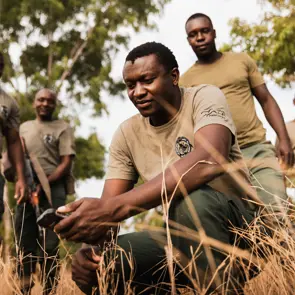
Behind the scenes with Hwange’s wildlife protectors
Behind every unforgettable safari are people working tirelessly to protect the wild. Meet Hwange's S...
Read moreLeigh-Anne Nel
30.10.2026
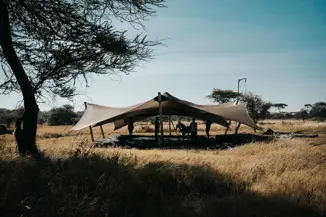
Wilderness Usawa Serengeti: The safari camp that follows the Great Migration
If you'd like to watch the Great Migration from a camp that moves with it, Usawa is built for exactl...
Read moreIngrid Wood
30.10.2026
From the mist to the Migration
What began among Rwanda's mist-covered volcanoes has grown into an extraordinary East African journe...
Read moreGrant Woodrow, Wilderness Chief Business Development Officer
26.10.2026
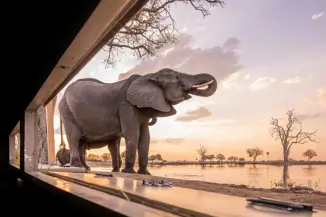
Live from Linkwasha: Behind the Africam in Hwange
Go behind the scenes of Africam at Wilderness Linkwasha in Hwange National Park, and discover how li...
Read moreLauren Dold
22.10.2026
Let’s plan your next journey
Ready?
When we say we’re there every step of the way, we mean it, literally. From planning the perfect circuit, to private inter-camp transfers on Wilderness Air, and easing you through Customs. We’re with you on the ground, at your side, 24-7, from start to finish. Ready to take the road less travelled? Contact our Travel Designers to plan an unforgettable journey.