Zimbabwe

Live from Linkwasha: Behind the Africam in Hwange

Your Guide to Africa

Lauren Dold

10/22/2026

Live from Wilderness Linkwasha
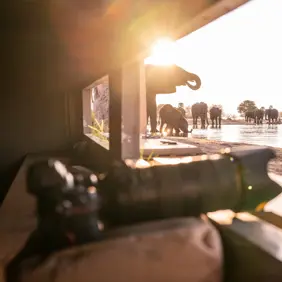
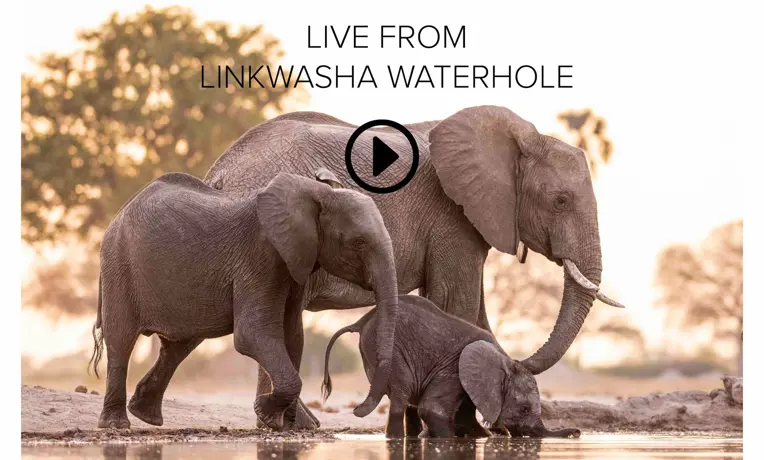
Somewhere in Hwange National Park, a breeding herd of elephants is drifting towards a waterhole in front of Wilderness Linkwasha. Thousands of kilometres away, someone in London, Sydney or Dubai is watching them arrive, in real time. Nothing has been filmed in advance, edited or scored. It is simply happening, and they happen to be there.


That’s the magic of Africam: a live camera that streams Africa’s great wildlife spectacles to anyone, anywhere, around the clock.


We spoke to Kirsten Hendry, Head of Production at Africam, about how a waterhole becomes a window to the world, who is actually moving the camera, and why live wildlife viewing has such a hold on the people who watch it.

Why Wilderness Linkwasha?

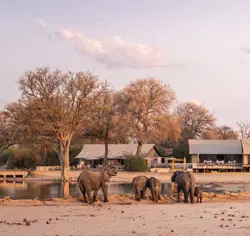
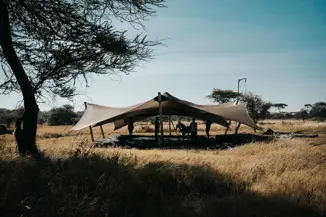
Hwange is Zimbabwe's largest national park and home to one of Africa's great elephant populations. With few permanent rivers, much of its wildlife life revolves around waterholes, especially as the dry season tightens its grip. Wilderness Linkwasha sits right in the thick of it, overlooking open plains and a waterhole that draws a steady procession of visitors.

Wilderness chose Linkwasha as the camera's home for two reasons: to showcase this remarkable lodge, and to give people around the world a window into the wildlife that Zimbabwe, and Hwange in particular, have to offer. For many viewers, it is their first real introduction to a park they may never have heard of before they tuned in.

Explore Wilderness Linkwasha
01 / 04

What makes a waterhole camera-worthy

The first ingredient is obvious: animals. Africam places its cameras where wildlife naturally gathers or passes through, which is why waterholes work so well. In the dry season, a single pan can host an astonishing cast of species from dawn to dark, each arriving on its own schedule.

But a great sighting spot is only half the equation. A live camera in the middle of the bush needs power, connectivity and enough bandwidth to push a stream out of a very remote place. Then there is the view itself: where animals tend to approach from, what sits in the background, and how much of the surrounding landscape the lens can take in.

‘It's really a combination of finding somewhere that's great for wildlife viewing but that we can realistically keep live 24/7,’ says Kirsten.

Keeping the bush on air

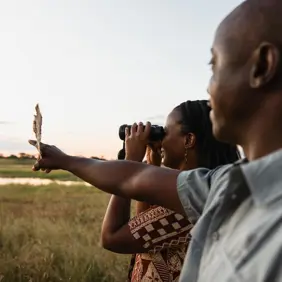
Close up of a guide pointing, with a guest using binoculars beside them.

Running a 24/7 stream from the wilderness is not for the faint-hearted. Power can fail, internet connections can drop and bandwidth is often limited. Add heat, dust, storms and insects, and the equipment is under constant pressure.


Then there are the neighbours. Elephants are endlessly curious about anything new in their territory, and hyenas and baboons are not far behind. A camera mount is, after all, just another interesting object to investigate.


The real test comes when something breaks. In a place like Hwange, nobody can simply pop out and fix it. Africam leans heavily on the Wilderness Linkwasha team for help on the ground, while its own technical team troubleshoots remotely. Every hour of uninterrupted footage is, quietly, a team effort between the lodge and the people behind the screen.

Meet the Zoomies

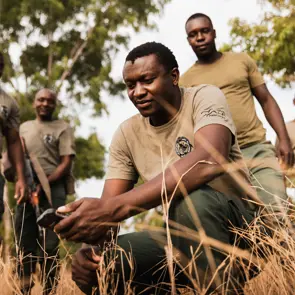
When the Linkwasha camera pans to follow a lone elephant bull or zooms in on a jackal at the water's edge, there is a person behind that movement. Africam calls its camera operators ‘Zoomies’: real people operating the cameras remotely, watching for wildlife and following the action as it unfolds.

‘It really is a global community watching and helping,’ says Kirsten. ‘Africam has an in-office team in South Africa, supported by a community of volunteer Zoomies spread across the US, the UK, Europe and Australia, and even one in Egypt.’

A Zoomie on shift may be keeping an eye on several cameras at once, constantly scanning for movement around the waterholes. When something special happens, they record it and share it, so those moments are not lost to the night.

You don't need a formal background in wildlife or conservation to become one. A genuine love of animals matters, but much of the skill is learned in the chair. Over time, Zoomies learn the animals and their behaviour, and start picking up cues most of us would miss: a flicker in the bushes, an alarm call, an impala suddenly frozen and staring in one direction.

‘Patience is a huge part of it,’ explains Kirsten.

Africam is always looking for new Zoomies, and anyone interested can get in touch with them to find out more. For a wildlife lover, it may be the closest thing to a job on the edge of a Hwange waterhole – without leaving home.

01 / 05

No edit, no second take

A documentary is a finished story. Someone has already filmed it, cut it and chosen the best moments for you. A live camera works differently: you are simply there.

You might witness something extraordinary, or watch a herd of elephants splashing and jostling at the water. Or you might spend ten minutes with a single bird, listening to the sounds of the bush. Kirsten believes those quieter moments are a big part of why people grow so attached to the cameras.

You see the Linkwasha waterhole change with the seasons, and slowly come to know a place you may never have visited. Then, without warning, something remarkable happens, and you are seeing it at the very moment it unfolds in the wild. ‘There's no edit and no second take – it's just wildlife doing what wildlife does in real time,’ says Kirsten.

From the screen to the waterhole

For many viewers, the Linkwasha camera becomes a daily ritual: a few minutes of Hwange with the morning coffee, or a late-night check to see who has come down to drink. And for some, watching turns into wanting. The waterhole they have come to know through a lens becomes a place they would like to stand beside.

That is perhaps the camera's greatest gift. It brings the wild to people who may never travel, and it plants a seed in those who one day will.

Wilderness Linkwasha

Go behind the lens

Linkwasha Camp

More to discover

Embark on another journey through Earth's ultimate, untamed places. These stories capture the raw beauty, passionate conservation efforts, and unique experiences that define Wilderness. We've handpicked these articles to deepen your connection with the wild and inspire your next adventure.
Read them here
The male lion is the king of the Wilderness

Let’s plan your next journey

Ready?

When we say we’re there every step of the way, we mean it, literally. From planning the perfect circuit, to private inter-camp transfers on Wilderness Air, and easing you through Customs. We’re with you on the ground, at your side, 24-7, from start to finish. Ready to take the road less travelled? Contact our Travel Designers to plan an unforgettable journey.